
How Many Restroom Trailer Stalls Do You Need? Capacity Planning by Guest Count or Crew Size
Start With the Real Demand, Not Just the Headcount
Choosing the right number of restroom trailer stalls is one of the most important planning decisions for an event, construction site, seasonal business, farm, industrial yard, or emergency deployment. A trailer that is too small creates lines, complaints, sanitation issues, and more frequent service calls. A trailer that is too large can add unnecessary purchase cost, towing weight, utility demand, and setup space. The best answer is rarely a single number pulled from a chart. The right restroom trailer capacity depends on who will use the facility, how long they will be on site, whether people arrive in waves, whether food and alcohol are served, and how easily the trailer can be serviced.
For event planners, the core question is usually how many guests will be on site at peak attendance. For contractors and industrial buyers, the better question is how many workers will need access during the busiest shift. For farms, venues, and parks, you may need to plan around repeated daily use rather than one short event. Restroom trailer capacity planning is about peak demand. A 300-person wedding with a seated dinner and bar has a very different usage pattern than a 300-person open house where guests come and go over six hours. A construction crew of 60 people on one shift has different needs than 60 workers divided across three shifts.
A restroom trailer gives users a more comfortable experience than a basic portable toilet because it can include flushing toilets, sinks, lighting, climate control, mirrors, finished interiors, and separate men’s and women’s areas. Those amenities also mean capacity planning should include water supply, waste holding, power, and cleaning schedule. Stall count is only one part of the decision, but it is the easiest place to start.


Event Capacity Guidelines by Guest Count
For private events, weddings, festivals, corporate gatherings, golf outings, and outdoor venues, begin by estimating peak guest count and event duration. A small two-station restroom trailer may work well for intimate gatherings, VIP areas, film crews, small venues, and private parties where usage is moderate and service access is simple. A four-station trailer often fits mid-size events where guests need a more polished restroom than a porta-potty and where separate men’s and women’s spaces help keep traffic moving. Larger eight-, ten-, and fourteen-station restroom trailers are better suited for high-traffic events, multi-day festivals, fairs, sports tournaments, and large venues that need multiple users at once.
As a practical planning framework, think of each stall as a service point. The more service points you provide, the shorter the wait during peak restroom breaks. Events with meals, alcohol, long programs, intermissions, or limited restroom alternatives should move up in stall count. Alcohol service usually increases restroom usage. So do hot temperatures, athletic events, family-friendly events with children, and events where guests remain on site for many hours. If guests will arrive and leave gradually, a smaller trailer may work. If everyone breaks at the same time between speeches, sets, innings, or performances, add more stalls.
A helpful way to plan is to divide the event into usage waves. For a wedding, waves often happen before the ceremony, immediately after dinner, and late in the evening. For a concert, restroom demand spikes between acts. For a race or sports tournament, demand can spike before start times and after finish times. A restroom trailer with more stalls reduces bottlenecks during these predictable rushes.


Construction Crew Size and Shift Planning
Construction sites and industrial projects should plan restroom trailer stalls by the largest crew on site at one time, not the total number of workers assigned to the project. If 80 workers are spread across a day shift and a night shift, the peak shift count may be 45, not 80. If subcontractors overlap during a major phase, your peak count may temporarily double. Crew size also affects the layout you choose. A rugged commercial restroom trailer with durable flooring, easy-clean surfaces, bright lighting, and practical fixtures is usually a better fit for construction than a decorative event trailer.
OSHA’s construction sanitation standard sets minimum toilet facility requirements by employee count, and job sites without sanitary sewer access must provide acceptable toilet facilities unless local codes prohibit them. For planning purposes, treat OSHA as the floor, not the comfort target. A restroom trailer can help improve morale, privacy, and handwashing access, but it still needs to be placed within reasonable reach of work areas, cleaned regularly, restocked, and protected from damage. Large sites may need multiple trailers or a mix of restroom trailers and standard units so workers do not lose time walking long distances.
For long-term projects, consider service intervals and shift patterns. A trailer serving a crew for a full work week may need different waste, water, cleaning, and restocking assumptions than a trailer serving a single Saturday event. If the trailer will operate through winter, ask about insulated and heated tanks, freeze protection, and power requirements. If the trailer will serve muddy or dusty work, choose flooring and wall materials that stand up to repeated cleaning.
Factors That Increase Stall Count
The same guest count can require different restroom trailer sizes depending on use conditions. Increase capacity when the event is longer than four hours, when food and drinks are served, when alcohol is served, when guests include families with children, when there are no permanent restrooms nearby, or when the restroom trailer is the only restroom option on site. Increase capacity for high-end events where long lines would damage the guest experience. A luxury restroom trailer is often part of the hospitality plan, so wait time matters as much as basic availability.
For job sites, increase capacity when crews work long shifts, when workers wear PPE that slows restroom use, when the trailer is far from the work zone, when the site has multiple trades arriving at the same time, or when handwashing and changing needs are more intensive. A construction restroom trailer can also be paired with shower, laundry, or bunkhouse trailers when a project needs a larger hygiene and crew comfort solution.
ADA access is another planning factor. If the site must provide accessible restrooms, do not simply add one standard stall and assume the requirement is met. Accessible layouts require ramps, clear turning space, grab bars, accessible fixtures, and enough space for safe entry and transfer. Plan accessible units as part of the total capacity, especially for public events, government-related deployments, schools, parks, and venues that expect a wide range of users.
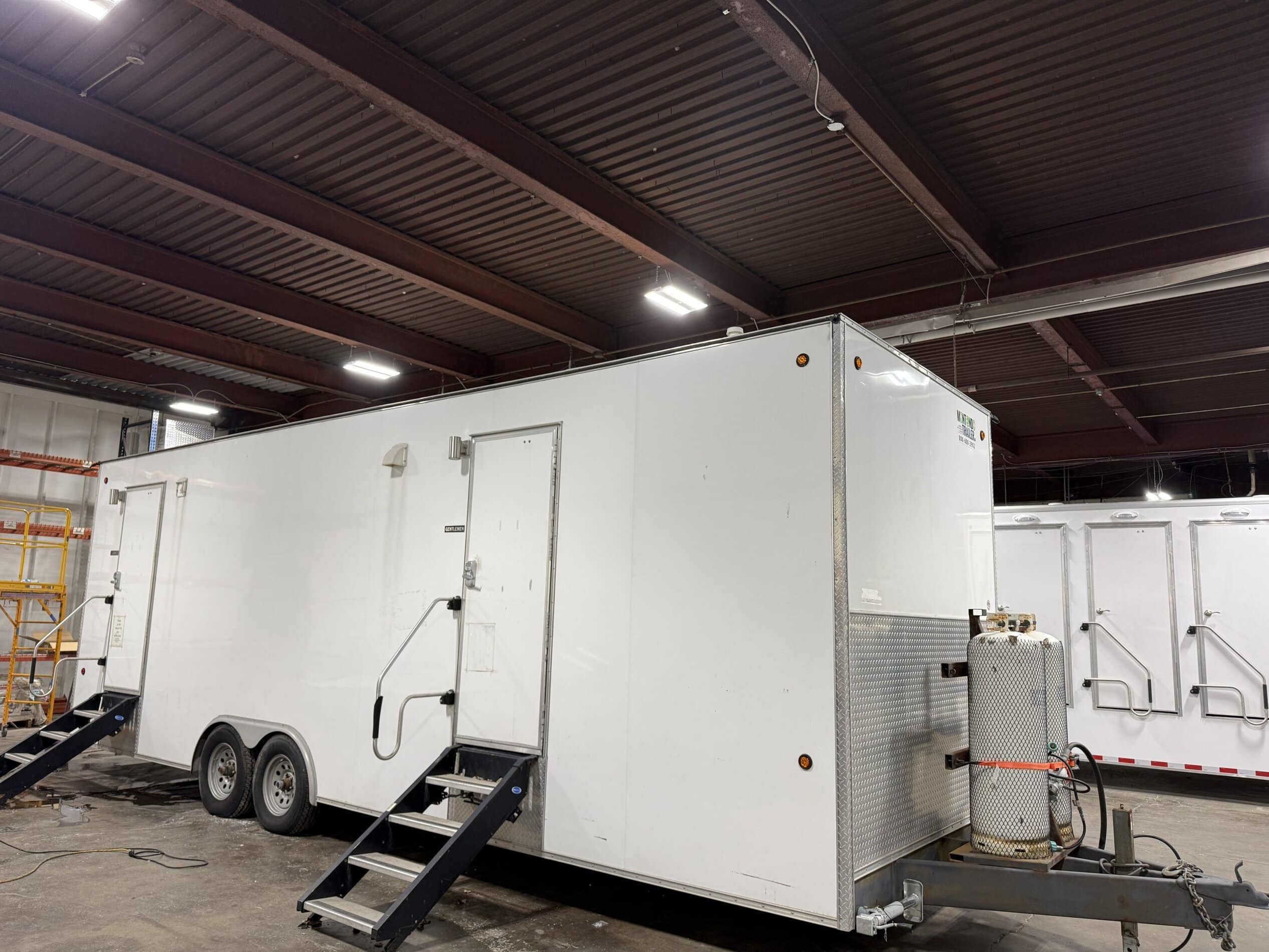
Choosing Between 2-, 4-, 8-, 10-, and 14-Station Layouts
A two-station restroom trailer is compact and efficient for small groups, private properties, small offices, guard shacks, VIP areas, mobile businesses, and limited-space sites. A four-station trailer is a versatile middle option for venues, weddings, construction offices, farms, and municipal uses. It usually gives enough flexibility for separate sides, multiple toilets, sinks, and sometimes a urinal depending on design. Eight-station layouts step into high-capacity territory and are well suited to event operators, large worksites, and facilities that need to move people quickly without a restroom building.
Ten- and fourteen-station restroom trailers are better for major events, fairs, large construction projects, campuses, disaster response staging areas, and organizations that need a serious temporary restroom facility. These trailers require more planning around towing, leveling, utility supply, waste management, and placement. The larger the trailer, the more important it is to confirm site access, turning radius, surface conditions, generator or shore power, water source, and pump-out access before purchase or deployment.
Montondo Trailer’s existing restroom trailer page references configurations from single-stall units up to fourteen-station options, which makes this cluster page a good place to educate buyers on how to choose among those layouts without competing with the main product page.
Frequently Asked Questions
The number of restroom trailer stalls you need depends on guest count, event length, and how people use the restroom during peak times. A small event may only need a 2-station restroom trailer, while larger weddings, festivals, fairs, or sports events may need 4, 8, 10, or 14 stations to reduce lines and keep guests comfortable. Montondo Trailer recommends planning around peak demand, not just total attendance.
Restroom trailer capacity is affected by the number of users, event duration, food and drink service, alcohol service, weather, restroom access nearby, and whether guests use the facilities at the same time. For job sites, crew size, shift overlap, PPE, cleaning schedules, and trailer distance from work areas can also change the number of stalls needed.
Both matter, but peak usage is the most important planning factor. A 300-person event where guests stay all day may need more restroom capacity than a 300-person event where people come and go. Events with meals, intermissions, speeches, concerts, or alcohol service often need more stalls because many guests use the restroom during the same short time window.
For a construction site, plan restroom trailer stalls based on the largest crew working at one time, not the total number of workers assigned to the project. If crews are split across shifts, use the busiest shift as the starting point. Larger sites may need multiple trailers or a mix of restroom trailers and standard units so workers do not waste time walking long distances.
A 2-station restroom trailer can work well for small groups, private events, VIP areas, small offices, or limited-space sites. A 4-station restroom trailer is a strong fit for many weddings, venues, farms, and mid-size job sites. Larger 8-, 10-, and 14-station restroom trailers are better for high-traffic events, large construction projects, fairs, campuses, and emergency response sites.
Yes. Restroom trailers offer more comfort than basic portable toilets, but they also require planning for water supply, waste holding, power, cleaning, site access, leveling, and pump-out access. Larger trailers may also need more room for towing, placement, turning radius, and service access.
Increase the number of restroom trailer stalls when the event lasts more than a few hours, food or alcohol is served, no permanent restrooms are nearby, guests include families with children, or the trailer is the only restroom option. For job sites, increase capacity when crews work long shifts, multiple trades overlap, or workers need stronger handwashing and hygiene access.
Yes. Montondo Trailer can help buyers compare restroom trailer layouts based on guest count, crew size, site conditions, comfort expectations, and service needs. The best option depends on how the trailer will be used, how long it will be on site, and whether the priority is event comfort, job site durability, or long-term facility support.