How Smart Buyers Evaluate Portable Restroom Trailers (Before They Pay)
January 9, 2026
Field-Ready Buying Guide: Power, Water, and Capacity for Disaster Relief Trailers
January 23, 2026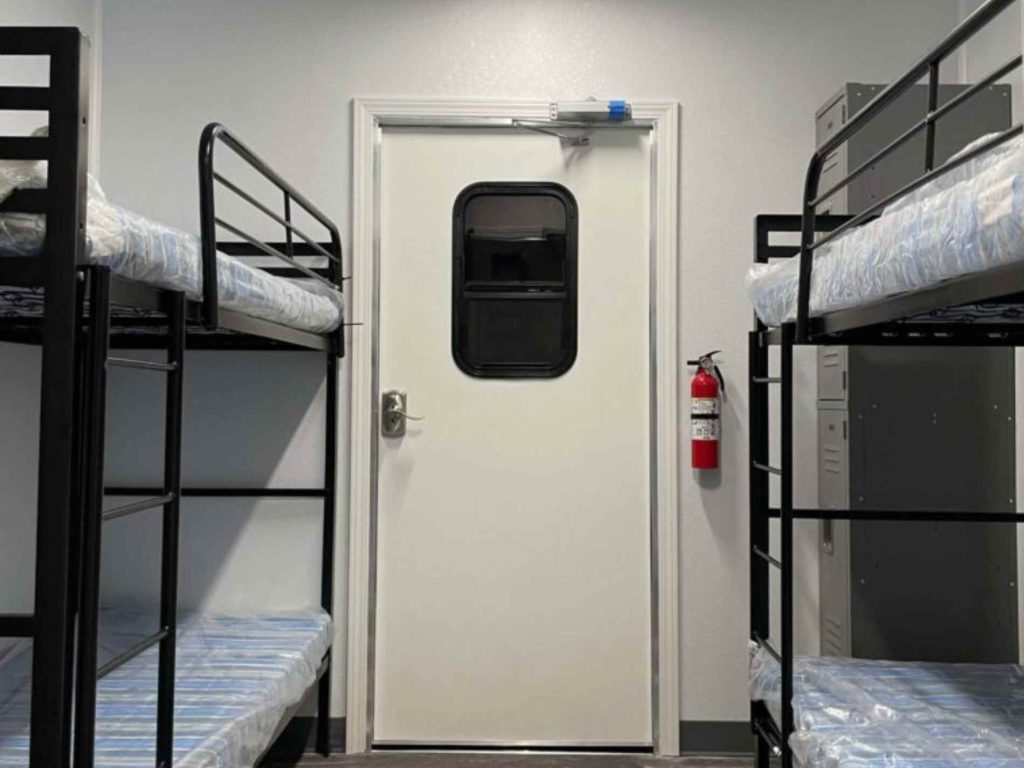
If you’re searching for a bunk house trailer for sale, you’re likely juggling comfort needs, crew size, and how quickly the unit can start earning. The right bunkhouse gives your team real rest, supports long shifts, and withstands constant turnover. This guide walks through the essentials—sleeping layouts, HVAC, power, plumbing, storage, towing, and an inspection checklist—so you can buy with confidence and get to work.
When you’re ready to compare models, start with Montondo’s bunkhouse trailers to view current configurations and specifications that fit different crew sizes.
Why a Bunkhouse Trailer Pays Off
A bunkhouse isn’t a luxury; it’s a productivity tool. Crews that sleep well make fewer mistakes, stay safer, and finish projects faster. Compared with ad-hoc housing or long commutes, on-site bunks cut travel time, reduce no-shows, and keep teams close to the job.
- Better crew morale: Real beds, temperature control, and privacy boost retention.
- Flexible deployment: Events, remote builds, disaster response, oil & gas, film sets, seasonal retail, and festival staff.
- Lower logistics: Fewer hotel bookings and split commutes; easier scheduling of early starts.
- Stronger ROI: A well-kept bunkhouse holds value and books across multiple markets.
Sleeping Layouts: More Than Just a Bunk Count
Layouts shape comfort and turnover speed. Look beyond the headline “sleeps X.”
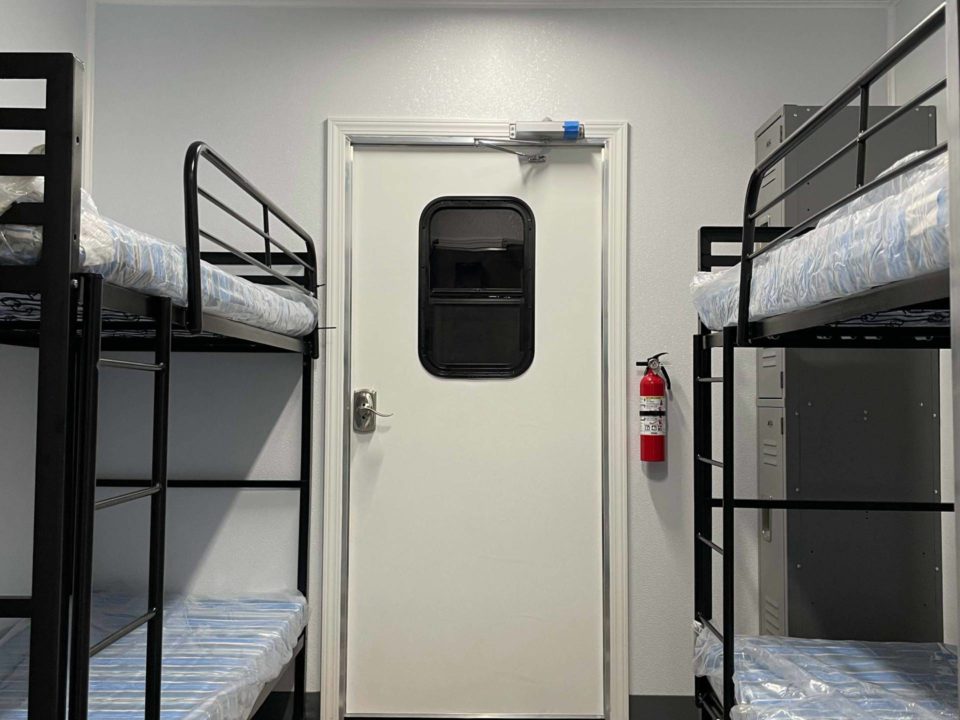
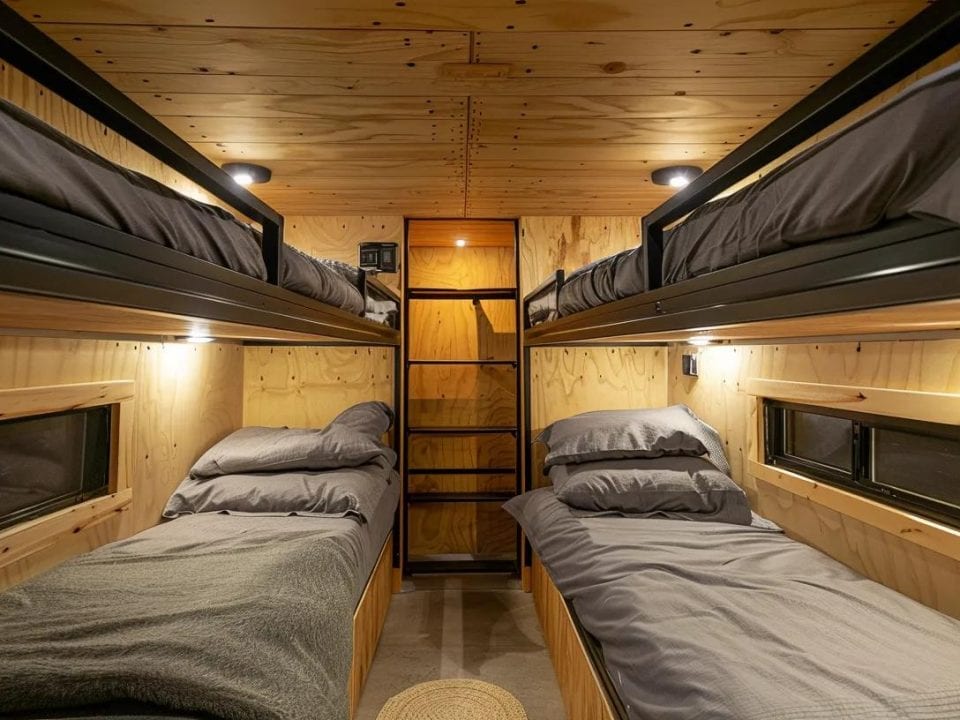
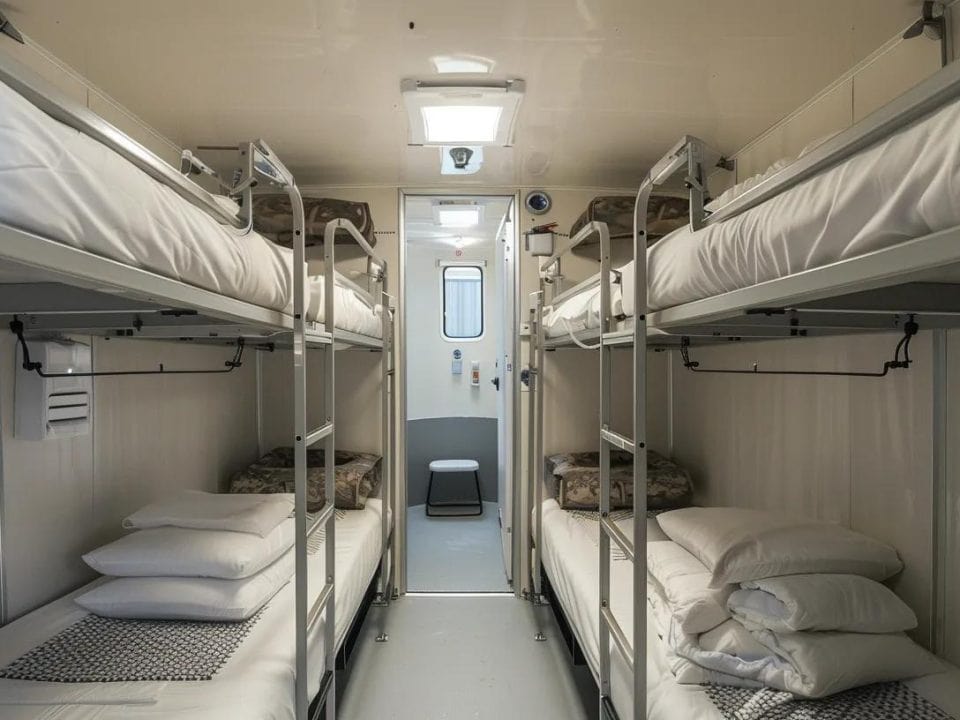
- Bunk orientation & spacing: side-by-side vs. stacked; headroom for upper bunks; and guardrails for safety.
- Mattress quality: Foam density and cover durability matter for nightly comfort and easy sanitizing.
- Privacy & quiet: Partitioning, curtains, or mini-cabins reduce light and noise bleed.
- Dedicated storage: Lockers, under-bunk cubbies, and overheads keep aisles clear and speed cleaning.
- Traffic flow: A clear center aisle helps crews gear up without disturbing others.
Tip: Match layout to crew patterns. Film crews with odd hours need strong blackout and quiet; construction crews value rugged finishes and easy storage for boots and PPE.
HVAC & Air Quality: Comfort That Protects Sleep
Temperature swings ruin rest. A good HVAC plan is non-negotiable.
- Sizing: BTUs/tonnage must match insulation and trailer volume. Too small and it struggles; too large and it short-cycles.
- Ducting & vents: Even airflow to upper bunks prevents hot pockets.
- Insulation & sealing: Tight doors, sealed penetrations, and quality gaskets keep the interior stable and quiet.
- Ventilation & filtration: Reliable exhaust and accessible filters reduce odors and dust.
- Cold-weather readiness: Electric heat strips or furnace, insulated tanks (if plumbing is included), and heat-traced lines expand your season.
Power Strategy: Shore, Generator, or Hybrid
Your power plan shapes uptime.
- Shore power: Quiet and convenient when available. Confirm plug type, amperage, and cord length.
- Generator: Choose an inverter generator sized for startup loads (HVAC, lighting, and charging). Place it for sound and exhaust management.
- Circuit mapping: Clearly labeled breakers and dedicated HVAC circuits prevent nuisance trips.
- Battery support: Healthy batteries smooth out short outages and reduce overnight generator starts.
Plumbing & Hygiene: Rested Crews Need Clean Routines
Not every bunkhouse includes showers or restrooms, but if yours does, vet the system carefully.
- Fresh/grey/black tank sizing: Align with headcount and service intervals; bigger tanks add weight, so balance capacity with towing limits.
- Water heater capacity: Peak shower usage requires quick recovery; lukewarm water reduces morale.
- Winterization package: Heated underbelly, tank heaters, and heat-traced lines safeguard cold-weather operations.
- Easy-clean surfaces: Coved floors, sealed edges, and moisture-resistant panels survive daily resets.
Durability: What Still Looks Good in Year Two
Daily turnover is tough on interiors. Materials and joinery set the long-term tone.
- Flooring: Non-slip, sealed, and resistant to swelling at edges.
- Cabinetry: Moisture-resistant substrates with protected edges; robust hinges and latches.
- Doors & frames: Rigid construction prevents sagging and rattles.
- Hardware: Metal latches, protected vents, and tamper-resistant fasteners extend life.
- Finish texture: Slightly textured walls hide scuffs better and clean faster.
Safety & Compliance: Don’t Skip the Basics
Protect your team and your investment.
- Egress: Clear, labeled exits with smooth-operating hardware.
- Detectors: Smoke, CO, and propane detectors with fresh batteries and test logs.
- Fire safety: Appropriate extinguishers and unobstructed access.
- Lighting: Low-level night lighting to prevent trips without waking sleepers.
- Stabilization: Strong stabilizer jacks and level indicators reduce bounce and misalignment of the door.
Towing & Setup: Fast In, Fast Out
Time on the job matters; aim for repeatable, quick setups.
- Weights: Know GVWR, dry weight, and typical operating weight (with people and water).
- Axles & brakes: Confirm ratings; test electric brakes with your controller.
- Tires: Trailer-rated, correct load index, current date codes, and a matching spare.
- Coupler & safety gear: Inspect coupler, jack, chains, and breakaway system.
- Leveling: Bubble levels and quick-deploy jacks speed up placement and improve sleep quality.
New vs. Pre-Owned: Which Path Fits Your Plan?
Both can work—timeline and cash flow decide.
New bunkhouse trailers
- Latest layouts and finishes, predictable maintenance cycles, full warranty.
- Custom options for branding, power, and storage.
- Plan around build and delivery lead times.
Pre-owned bunkhouse trailers
- Faster deployment and lower upfront cost.
- Great for proving demand before scaling.
- Condition varies—inspection and records are everything.
When you’re evaluating options, compare details side by side on Montondo’s bunkhouse trailers page to align capacity, HVAC, and power with your crew size.
Pricing Drivers: Why Similar Trailers Cost Different
Expect variation—and know what moves the price.
- Model year & hours: Newer units and lighter usage command higher prices.
- Sleep count & layout: More bunks with real storage and privacy features add value.
- HVAC & insulation: Cold-weather packages and ducted systems carry a premium.
- Power package: Included generators, extra cords, and upgraded panels affect the price.
- Plumbing suite: Restroom/shower modules and larger tanks increase cost.
- Transportation and setup: Delivery, initial stocking, and permits affect the actual number.
ROI: Turning Beds Into Better Outcomes
A strong bunkhouse can pay for itself quickly.
- Reduced travel: Shorter commutes mean more-rested crews and tighter schedules.
- Fewer cancellations: Teams staying on-site are less impacted by weather or traffic.
- Premium bookings: Film and corporate events often pay more for quality crew housing.
- Year-round use: Cold-weather packages keep revenue flowing in shoulder seasons.
- Resale value: Well-maintained units remain attractive on the secondary market.
The Smart Buyer’s Inspection Checklist
Use this list when assessing any bunk house trailer for sale:
Exterior & Frame
- Check frame welds, coupler, jack, safety chains, and breakaway cable.
- Inspect siding for dents/delamination; confirm roof seams and corner trim.
- Verify VIN plate, GVWR, axle ratings; read tire date codes and wear patterns.
- Deploy stabilizers; ensure the trailer can be leveled quickly.
Doors, Windows & Seals
- Test smooth open/close, latch feel, and gasket condition.
- Confirm window function and screens (if applicable).
- Look for light leaks at night (quick test for gaps).
Interior & Sleeping Areas
- Assess bunk stability, guard rails, and ladder strength.
- Check the mattress condition and removable covers for cleaning.
- Review storage capacity—lockers, under-bunk, overhead.
- Evaluate lighting: night lights, task lights, and dimmers.
HVAC & Electrical
- Run A/C and heat; verify airflow to upper bunks.
- Inspect breaker panel labeling; test GFCI outlets.
- Confirm the shore power cord type and condition; check the cord length.
- If a generator is included, start it cold, test it under load, and record the hours.
Plumbing (if equipped)
- Identify fresh/grey/black tank sizes; check for leaks or patchwork repairs.
- Run water at sinks/showers; verify pump pressure and water-heater recovery.
- Confirm winterization features (heated underbelly, tank heaters, heat-traced lines).
Documentation
- Request service records, manuals, and any warranty details.
- Confirm title status and transfer steps before transport.
Upgrades Worth the Money
These options tend to earn their keep:
- Blackout package: Light-blocking shades plus privacy curtains improve sleep.
- Quiet-comfort kit: Vibration damping and acoustic treatment reduce nighttime noise.
- Hands-free fixtures: Faster cleanups in high-turnover environments.
- Smart monitoring: Tank-level indicators and basic telemetry reduce unexpected service calls.
- Heavy-duty flooring: Extra wear layer for boots and gear.
Delivery Day & First Placement
Set up for success the first time.
- Access path: Measure gates, turns, and overhead clearance.
- Ground conditions: Choose stable, level ground; use pads on soft surfaces.
- Utilities plan: Pre-stage cords and hoses; verify amperage and water pressure.
- Stocking list: Bedding, cleaning supplies, spare bulbs/fuses, filters, and a basic toolkit.
- Orientation: Walk the team through breakers, shutoffs, HVAC controls, and daily reset tasks.
Signs to Pause or Renegotiate
- Persistent musty odor even after a deep clean.
- Unlabeled or messy wiring in the breaker panel.
- Uneven tire wear (possible axle or weight issue).
- Soft floor spots near door thresholds and wet areas.
- HVAC short-cycling or weak airflow to upper bunks.
- Evidence of roof leaks: stains, swollen panels, or rippled wall coverings.
Real-World Use Cases
- Disaster response base: Sleep close to the action, reduce travel, and rotate crews smoothly.
- Remote building site: Long stays with shore power; winterization extends the season.
- Festival or event staff camp: Quick setup, strong ventilation, and secure storage.
- Film production village: Quiet HVAC, blackout options, and premium finishes for extended shoots.
Final Take
The best bunkhouse balances sleeping capacity, climate control, power, and durability. Focus on the daily realities—quiet nights, quick cleanups, safe egress, and easy service access—and you’ll end up with a unit that performs for years. When you’re ready to line up features with your crew’s needs, browse Montondo’s current bunkhouse trailers to see what fits your plan.
FAQs
1) How many people should a single bunkhouse sleep?
It depends on layout and privacy needs. For longer deployments, fewer bunks with better storage and blackout features can mean better rest and fewer complaints.
2) Do I need a generator if shore power is available?
Shore power is ideal where it exists. For remote sites or unstable grids, a right-sized inverter generator keeps HVAC and lights reliable overnight.
3) What cold-weather features matter most?
Insulation, heated underbelly, tank heaters, and heat-traced lines (if plumbed). Proper sealing around doors and penetrations is equally important.
4) How do I keep noise down at night?
Ducted HVAC, soft-close hardware, night-lighting, acoustic treatment, and a firm stabilization setup all help maintain quiet.
5) Which upgrades pay back quickly?
Blackout window treatments, heavy-duty flooring, hands-free fixtures, and tank monitoring (where applicable) typically pay off through faster turnovers and happier crews.

Jack Montondo founded Montondo Trailer in 2014. Jack has worked hard to make his business a success, paving the way to making it a multi-million dollar. Montondo Trailers is a premier design and manufacturing leader in Custom Trailers. Here at Montondo Trailer, we have become an industry-leading manufacturer of Custom Trailers. Through the efforts of our expert team of engineers, designers, and sales personnel, we are here to ensure that our clients come out with a trailer that they could only dream of. We are constantly innovating and developing new ways to ensure our trailers are the best on the market. We firmly believe our dedication to quality sets us apart from our competition.