How Hazmat Decontamination Trailers Support Safer Emergency Response
June 9, 2026
Towing a specialty trailer is not the same as pulling a small utility trailer down the road.
A restroom trailer, shower trailer, laundry trailer, combination trailer, or bunkhouse trailer carries more weight, offers more built-in systems, and requires more setup. These trailers may include water tanks, plumbing, fixtures, lighting, heating, cooling, waste systems, stairs, doors, and interior finishes.
That means towing safety starts long before the trailer moves.
Anyone learning how to tow a restroom trailer should understand the basics of hitch class, GVWR, tongue weight, brakes, trailer balance, route planning, and pre-trip inspection. These details help protect the trailer, the tow vehicle, the driver, and everyone else on the road.
The goal is not just to move the trailer from one place to another. The goal is to transport it safely, set it up properly, and avoid preventable damage.
What Makes a Specialty Trailer Different?
A specialty trailer is built for a specific purpose.
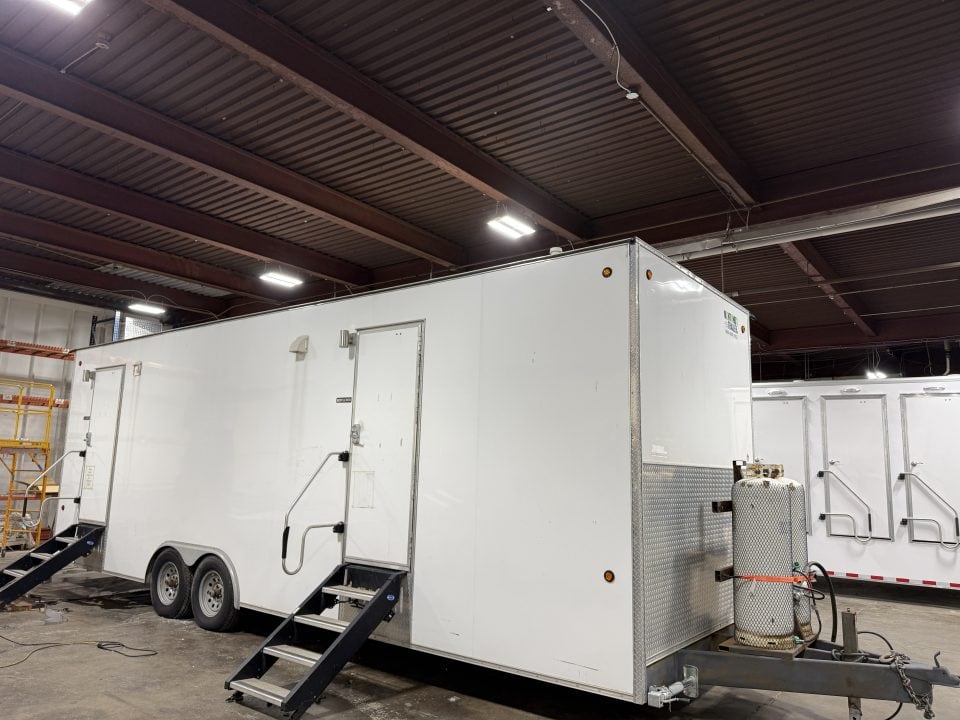
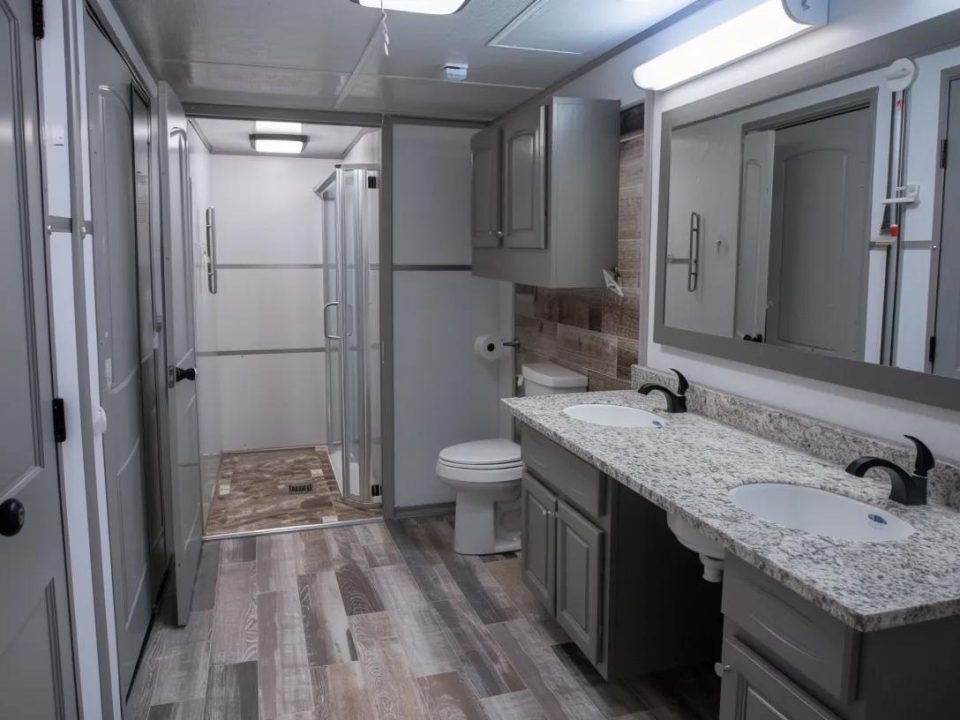
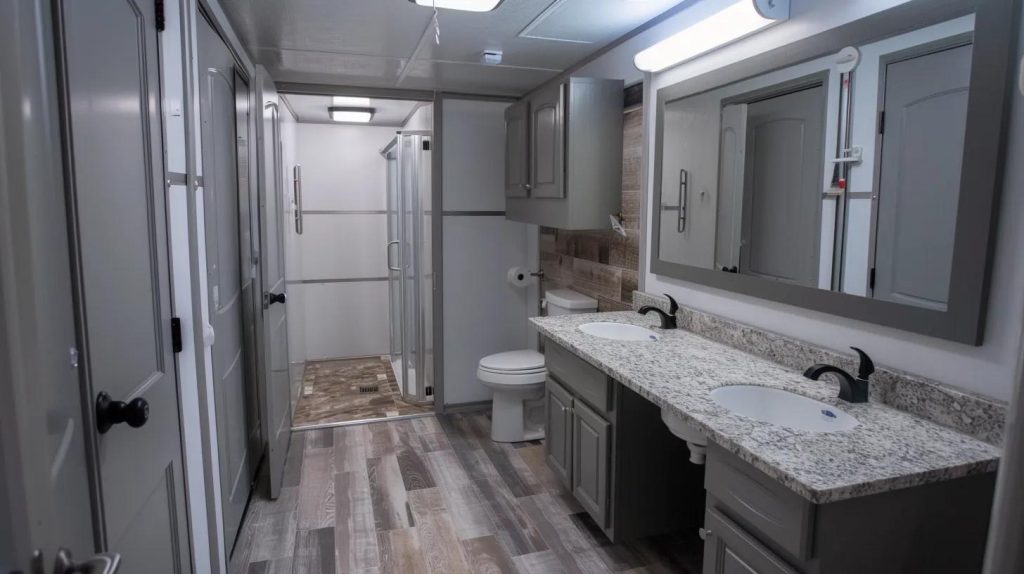
A restroom trailer is designed to provide private restroom access. A shower trailer gives users a place to wash and change. A laundry trailer supports washing and drying needs. A bunkhouse trailer provides sleeping space. A combination trailer may combine several functions into a single unit.
Because these trailers serve people onsite, they often include more equipment than a basic cargo trailer.
That added equipment affects towing.
The trailer may have a higher loaded weight. It may require a stronger hitch. It may need trailer brakes. It may have a larger turning radius. It may also require more careful leveling and setup upon arrival.
This is why the towing process should be planned with the trailer’s size, weight, and function in mind.
Start With the Trailer’s Weight Rating
Before towing, the first number to understand is GVWR.
GVWR stands for Gross Vehicle Weight Rating. It is the maximum allowed weight of the trailer when fully loaded. This includes the trailer itself plus anything inside it, such as water, supplies, waste, equipment, tools, or extra materials.
When someone asks how to tow a restroom trailer, GVWR is one of the most important starting points.
A restroom trailer may be much heavier when tanks are full. Freshwater, gray water, and waste can add significant weight. Even supplies such as paper products, cleaning materials, hoses, steps, and accessories can increase the total load.
The tow vehicle must be rated to handle the loaded trailer weight.
Never assume a vehicle can tow a trailer just because it can move it around a lot or a short distance. Towing on public roads, hills, turns, and longer trips places more demand on the vehicle, hitch, brakes, tires, and suspension.
Understand Tow Vehicle Capacity
The tow vehicle must be matched to the trailer.
A truck or vehicle has its own towing capacity. This is the maximum trailer weight it is designed to pull under proper conditions. It also has ratings for payload, axle weight, hitch weight, and gross combined weight.
The trailer’s loaded weight should stay within the vehicle’s towing capacity.
Payload also matters. Tongue weight, passengers, tools, fuel, and cargo inside the vehicle can all count against payload capacity. A vehicle may have enough towing capacity on paper, but still be overloaded when payload is factored in.
This is a common mistake.
The safest approach is to review the tow vehicle’s ratings before connecting the trailer. The vehicle should have sufficient capacity for the trailer, passengers, hitch load, and any other items being carried.
For heavier specialty trailers, using the right tow vehicle is not optional. It is part of safe transport.
Know the Hitch Class Before You Tow
The hitch connects the trailer to the tow vehicle, so it must be rated correctly.
Hitch classes are based on weight capacity. Lighter hitch classes are meant for smaller loads, while heavier hitch classes are built for larger trailers. A specialty trailer often requires a stronger hitch than a small landscape or utility trailer.
The hitch rating should meet or exceed the trailer’s loaded weight and tongue weight.
The ball mount, hitch ball, receiver, coupler, safety chains, and related hardware must also be rated correctly. The whole towing setup is only as strong as its lowest-rated part.
For example, using a strong truck with an underrated hitch ball still creates a safety problem. The same is true if the receiver is properly rated, but the ball mount is not.
When learning how to tow a restroom trailer, think of the hitch system as a full setup, not one single part.
Each piece must match the job.
Check the Coupler and Hitch Ball Size
The coupler on the trailer must fit the hitch ball on the tow vehicle.
If the ball is too small or the coupler is not locked correctly, the trailer can separate from the tow vehicle. If the ball is too large, the coupler may not seat properly.
Before moving, the coupler should be fully lowered onto the ball and locked in place.
After locking it, the driver should raise the trailer jack slightly to confirm the coupler stays attached. This quick check can reveal whether the connection is secure before the trailer leaves the site.
The hitch pin should also be installed correctly, and any locking clip should be in place.
Small connection errors can create major problems on the road.
Tongue Weight and Trailer Balance
Tongue weight is the downward force the trailer places on the hitch.
Too little tongue weight can cause trailer sway. Too much tongue weight can overload the rear of the tow vehicle, affect steering, and reduce braking control.
A properly balanced trailer should sit level or close to level when connected to the tow vehicle.
Restroom trailers and other specialty trailers may have built-in systems that affect balance. Tanks, fixtures, and equipment are often placed in fixed locations. If additional supplies are loaded into the trailer, they should be placed carefully.
Heavy items should not be stacked in a way that changes the trailer’s balance too much.
If a trailer feels unstable, sways heavily, or causes the tow vehicle to sag, stop and review the setup before continuing.
Never Ignore Trailer Brakes
Many specialty trailers require trailer brakes.
A restroom trailer can carry enough weight that the tow vehicle’s brakes alone may not be enough for safe stopping. Trailer brakes help control the trailer during slowing, stopping, downhill travel, and emergency braking.
The brake controller should be set correctly before travel.
If the controller is set too low, the trailer may push the tow vehicle during braking. If it is set too high, the trailer brakes may grab too aggressively. The setting should provide smooth, controlled stopping.
Before entering traffic, test the trailer brakes at low speed in a safe area.
The driver should feel the trailer braking without jerking, dragging, or locking up. If the brakes do not feel right, the issue should be corrected before transport continues.
Inspect Tires Before Every Trip
Trailer tires carry heavy loads and sit under pressure for long periods.
Before towing, check the tires for proper inflation, cracks, bulges, uneven wear, exposed cords, or damage. Tire pressure should be checked when the tires are cold whenever possible.
Underinflated tires can overheat and fail.
Overloaded tires can also become dangerous. The trailer’s tires must be rated for the weight they are carrying. This is especially important if the trailer is loaded with water, supplies, or equipment.
The spare tire should also be checked.
A flat spare is not helpful during a roadside problem. Make sure the spare is inflated, accessible, and usable before the trip begins.
Check Lights, Wiring, and Signals
A restroom trailer may block the tow vehicle’s rear lights, so trailer lights are essential.
Before driving, check brake lights, turn signals, running lights, marker lights, and hazard lights. The wiring plug should be seated firmly and protected from being dragged or pinched.
Lighting helps other drivers understand what the tow vehicle and trailer are doing.
This matters during lane changes, turns, braking, night travel, bad weather, and low-visibility conditions.
A trailer with poor lighting creates a risk for everyone nearby.
If a light is out, fix it before towing. Do not assume a short trip is safe without working signals.
Secure Doors, Steps, Panels, and Equipment
Specialty trailers often have doors, windows, vents, panels, stairs, ramps, hoses, and exterior accessories.
Before towing, all loose or moving parts should be secured.
Doors should be locked or latched. Steps should be folded and secured. Hoses should be stored. Panels should be closed. Interior items should be placed where they will not shift, fall, or damage fixtures during transport.
Inside a restroom trailer, check that supplies are not loose.
Paper products, cleaning items, trash containers, small equipment, and tools can move during travel. Even lightweight items can create damage if they slide or fall repeatedly.
A few minutes of securing the trailer can prevent costly repairs later.
Empty or Manage Tanks Before Transport
Tank levels can change towing weight and balance.
A restroom trailer may have freshwater, gray water, and waste tanks. Water is heavy, and full tanks can quickly increase trailer weight.
Before towing, know whether the trailer should be moved with the tanks empty, partially filled, or in accordance with the unit’s specific transport instructions.
In many cases, moving with unnecessary liquid weight should be avoided.
Full or shifting tanks can affect braking, handling, and balance. They can also place extra strain on the trailer and tow vehicle.
If the trailer has been used at a job site or event, ensure waste is properly handled before transport. Do not move a trailer without understanding the condition of its tanks and systems.
Plan the Route Before Leaving
Towing a specialty trailer requires more space and more patience.
Before leaving, review the route for tight turns, narrow roads, low clearances, steep grades, rough ground, soft soil, and limited access points. A trailer that fits easily on a wide road may be harder to move through a crowded event site, construction area, or rural property.
The arrival route matters just as much as the highway route.
Drivers should know where the trailer will be placed, how they will turn around, and whether the ground is firm enough to support the trailer.
Backing a restroom trailer into a tight space can be difficult without help. A spotter can guide the driver and watch for obstacles that may not be visible to the driver in the tow vehicle.
Good route planning helps avoid stressful last-minute decisions.
Drive Differently When Towing
Towing changes how a vehicle handles.
The combined vehicle and trailer are longer, heavier, and slower to stop. The driver needs more space for braking, wider turns, and slower lane changes.
Sharp steering, sudden braking, and quick acceleration should be avoided.
Speed should be controlled, especially on curves, rough roads, hills, and in bad weather. High speeds can increase sway and reduce reaction time.
Drivers should also watch their mirrors often.
The trailer’s position, tire behavior, lane placement, and following traffic all matter during transport.
Safe towing is steady, smooth, and patient.
Watch for Trailer Sway
Trailer sway occurs when the trailer begins to move side to side behind the tow vehicle.
It can be caused by poor weight balance, excessive speed, wind, passing vehicles, underinflated tires, improper tongue weight, or an incorrect hitch setup.
If sway happens, do not make sudden steering moves.
The driver should stay calm, hold the wheel steady, reduce speed gradually, and avoid slamming the brakes. If equipped, manual trailer brake control may help bring the trailer back in line, but it should be used carefully.
After stopping safely, inspect the setup.
Check load balance, hitch height, tire pressure, speed, and overall connection. Do not continue at normal speed if sway continues.
Sway is a warning sign that something needs attention.
Use a Spotter When Backing or Placing the Trailer
Backing a specialty trailer requires care.
Restroom trailers are often placed in specific locations where users need easy access. That may mean backing near buildings, event areas, sidewalks, service zones, or temporary utility connections.
A spotter can help prevent damage.
The spotter should stand where the driver can see them and should use clear hand signals or phone communication. The driver should stop immediately if the spotter disappears from view.
Backing should be slow.
Small steering changes work better than sharp corrections. If the trailer begins to angle too much, pull forward and reset rather than forcing the trailer into position.
Patience protects the trailer and the site.
Leveling After Transport
Once the trailer reaches the site, towing safety shifts into setup safety.
A restroom trailer should be placed on stable ground and leveled properly. Leveling helps doors operate correctly, improves user comfort, and supports proper system function.
Wheel chocks should be used before disconnecting from the tow vehicle.
The trailer jack and stabilizers should be used according to the trailer’s setup needs. Stabilizers are not meant to replace safe ground placement, but they can help reduce movement once the trailer is parked.
A trailer should not be placed where it may shift, sink, or lean.
Soft ground, slopes, wet areas, and loose gravel can create problems during use. Choose a placement area that supports the trailer safely.
Pre-Trip Checklist for Towing a Restroom Trailer
Before towing, go through a simple checklist.
Confirm the tow vehicle is properly rated for the loaded trailer. Check the trailer’s GVWR and estimated loaded weight. Verify the hitch, ball mount, hitch ball, and coupler are rated and correctly connected.
Check safety chains and cross them under the coupler. Connect the breakaway cable properly. Test lights and brakes. Inspect tires and confirm proper inflation.
Secure doors, steps, windows, vents, panels, hoses, and interior items. Review tank levels. Make sure the trailer jack is raised and locked for travel.
Look under and around the trailer before moving.
Remove wheel chocks only when ready to depart. Test braking at low speed before entering regular traffic.
A checklist helps prevent simple mistakes.
Safety Chains and Breakaway Cable
Safety chains provide backup protection if the trailer disconnects from the hitch.
They should be crossed under the coupler and connected to the proper attachment points on the tow vehicle. Crossing the chains helps create a cradle under the trailer tongue if it comes loose.
The chains should have enough slack for turns but not so much that they drag on the road.
The breakaway cable is also important. It activates the trailer brakes if the trailer separates from the tow vehicle. The cable should be attached to the tow vehicle, not wrapped around the safety chains.
A damaged, missing, or poorly connected breakaway cable should be fixed before towing.
These details may seem small, but they are major safety features.
Common Towing Mistakes to Avoid
One common mistake is towing with the wrong vehicle.
Another is assuming the trailer is empty when tanks or supplies add weight. Some drivers also forget to check tire pressure, trailer lights, or brake controller settings.
Using the wrong hitch ball size is another serious issue.
Other mistakes include driving too fast, making sharp lane changes, ignoring sway, failing to secure doors or steps, and placing too much weight behind the trailer axle.
Some problems happen after arrival.
For example, a trailer may be parked on soft ground, disconnected without chocks, or set up without leveling. These mistakes can affect safety and trailer performance.
Safe towing is not one action. It is a series of small checks done correctly.
When Professional Transport Makes Sense
Not every customer should tow a specialty trailer on their own.
Professional transport may be the better choice when the trailer is large, the route is difficult, the site has tight access, or the tow vehicle is not properly rated. It may also make sense when the driver is not experienced with heavier trailers.
A restroom trailer is a valuable unit with plumbing, fixtures, tanks, and interior features.
Transport damage can be expensive and disruptive. If the trailer is needed for an event, jobsite, or emergency support, delivery problems can affect the entire schedule.
Using experienced transport support can reduce risk.
Montondo Trailer can help customers think through trailer type, placement needs, and rental support so the unit arrives ready for practical use.
Why Towing Knowledge Matters for Rental Planning
Even when someone does not personally tow the trailer, understanding the basics helps with planning.
A customer who understands GVWR, access space, turning room, level ground, and placement needs can better prepare the site. That makes delivery smoother and helps avoid delays.
For example, a restroom trailer may require sufficient space for doors, steps, service access, and user traffic. It may also need room for the delivery vehicle to enter, position the trailer, and exit safely.
If the site is crowded, muddy, sloped, blocked, or too narrow, placement can become harder.
Good planning helps the rental process go more smoothly from pickup to delivery.
Learning how to tow a restroom trailer starts with understanding weight, connection, control, and planning.
The tow vehicle must be properly rated. The hitch system must match the trailer. The trailer must be balanced, connected, inspected, and secured. Brakes, lights, tires, safety chains, and tank levels should all be checked before transport.
Safe driving matters just as much as safe setup.
A specialty trailer is more than a box on wheels. It is a mobile facility with important systems inside. Transporting it correctly protects the trailer, the driver, the site, and the people who will use it.
Whether the trailer is being moved for an event, jobsite, field operation, or temporary facility need, careful towing and transport planning should always come first.
FAQs
How do I know if my vehicle can tow a restroom trailer?
Check the vehicle’s towing capacity, payload rating, hitch rating, and gross combined weight rating. The vehicle must be rated for the trailer’s loaded weight, not just the empty trailer weight.
What does GVWR mean when towing a restroom trailer?
GVWR means Gross Vehicle Weight Rating. It is the maximum allowed weight of the trailer when fully loaded, including the trailer body, tanks, supplies, equipment, and anything carried inside.
Do restroom trailers need trailer brakes?
Many restroom trailers are heavy enough to require trailer brakes. Brakes help improve stopping control and reduce strain on the tow vehicle, especially during downhill travel or sudden stops.
Can a restroom trailer be towed with full tanks?
Tank levels should be reviewed before transport. Full tanks add major weight and may affect handling, braking, and balance. Follow the trailer’s transport instructions and avoid carrying unnecessary liquid weight when possible.
Should I tow a specialty trailer myself or use delivery support?
Use delivery support if the trailer is large, the route is difficult, the site has tight access, or your tow vehicle is not properly rated. Professional transport can reduce risk and help protect the trailer.

Jack Montondo founded Montondo Trailer in 2014. Jack has worked hard to make his business a success, paving the way to making it a multi-million dollar. Montondo Trailers is a premier design and manufacturing leader in Custom Trailers. Here at Montondo Trailer, we have become an industry-leading manufacturer of Custom Trailers. Through the efforts of our expert team of engineers, designers, and sales personnel, we are here to ensure that our clients come out with a trailer that they could only dream of. We are constantly innovating and developing new ways to ensure our trailers are the best on the market. We firmly believe our dedication to quality sets us apart from our competition.