Essential Features to Consider When Renting a Restroom Trailer for Your Event
October 29, 2025
Buyer Beware: Mistakes to Skip When Shopping Portable Bathroom Trailers for Sale
November 11, 2025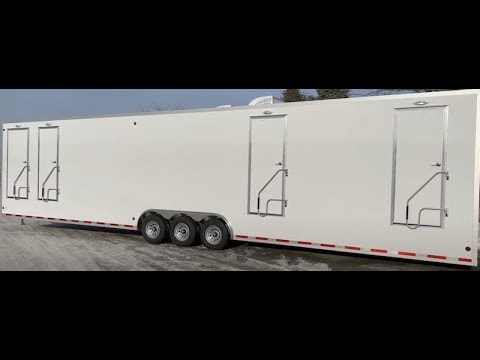
If you’re eyeing shower trailers for sale with true off-grid capability, the difference between a smooth, comfortable setup and a headache comes down to two systems: power and water. This guide walks you through practical sizing, what to buy, how to set up, and how to maintain those systems when there’s no utility pole or city spigot in sight. We’ll keep it skimmable with clear sections, checklists, and simple formulas you can actually use in the field. Throughout, we’ll also point you to Montondo Trailer’s site so you can compare options and plan your purchase of shower trailers for sale.
What “off-grid-ready” really means
“Off-grid-ready” shower trailers can safely produce hot water, maintain steady pressure, handle wastewater, and power all electrical needs without relying on municipal hookups. That translates to:
- Independent freshwater sourcing (onboard tanks, deliveries, or portable treatment)
- Right-sized hot water production (propane/electric, tank/tankless)
- Reliable pressure and flow (pump + accumulator)
- Adequate grey-water storage and a lawful disposal plan
- Self-contained power (generator and/or solar + batteries + inverter)
- Cold-weather safeguards (freeze protection for plumbing and tanks)
If a unit can’t do all of the above, it’s not truly ready to live away from the grid for long.
The quick off-grid checklist
Use this at a glance, then dive deeper into the sections below:
- Users per day + showers per user estimated
- Target shower length (realistic minutes, not idealistic ones)
- Flow rate of showerheads (in GPM) and number of bays
- Freshwater tank capacity and refilling plan
- Water heater type and recovery/BTU sizing
- Grey-water tank capacity and pump-out plan
- Pump & pressure: GPM, PSI, accumulator tank
- Filtration & treatment if sourcing from a non-potable supply
- Generator sizing, fuel plan, and run strategy
- Battery + inverter capacity if you want quiet hours
- Cold-weather heat tracing/insulation/winterization plan
- Daily/weekly maintenance schedule
When you’re ready to browse units and options, start at Montondo Trailer.
Step 1: Estimate real water demand
Under-estimating water is the #1 off-grid mistake. Use this simple formula:
Daily gallons = Users × Showers per user × Minutes per shower × Flow rate (GPM)
Example:
- 16 users
- 1 shower each
- 6 minutes
- 1.8 GPM low-flow showerheads
Daily gallons = 16 × 1 × 6 × 1.8 = 172.8 gallons/day
Add a 15–20% buffer for rinsing stalls and handwashing near the shower bays:
- 173 × 1.2 ≈ 208 gallons/day
Now you have a baseline to size tanks and heating.
Tip: Flow restrictors (1.5–1.8 GPM) maintain comfort but dramatically cut total load across multiple bays.
Step 2: Freshwater storage that actually lasts
How much tank do you need?
If you plan 2 days between refills, multiply your daily gallons by 2 and add a cushion:
- 208 × 2 = 416; add 20% ⇒ ~500 gallons freshwater
Tank material & layout
- Poly (HDPE) is common, durable, and easier to service.
- Larger operations may split capacity into multiple smaller tanks to balance weight and ease cleaning.
- Place tanks to keep the weight low and centered for safer towing.
Refilling without hookups
- Water delivery: arrange a bulk water drop on a schedule that matches your usage.
- Mobile tote: shuttle water from a distant hydrant where legal and permitted.
- On-site treatment: if you have a safe source, use sediment, carbon, and UV to make it suitable for bathing.
Step 3: Hot water production (propane vs. electric)
Tank vs. tankless
- Propane tankless: compact, great for continuous duty if supply keeps up; look at BTU/hr and minimum flow activation.
- Tank-style (propane or electric): stores hot water; recovery rate is key for back-to-back showers.
Sizing quick-take
- Peak demand ≈ Number of active bays × showerhead GPM
- For three bays at 1.8 GPM, the peak is 5.4 GPM.
To raise 50–60°F (typical groundwater to comfortable setpoint), a propane tankless heater often needs 150k–200k+ BTU/hr per 4–6 GPM, depending on delta-T. Consider multiple units in parallel for redundancy and load sharing.
Practical tips
- Use thermostatic mixing valves for safe, stable temperatures.
- If electric is your only option, ensure your generator/inverter can handle heater surge and sustained wattage—often a high bar for strictly off-grid setups.
Step 4: Pumps, pressure, and flow that feel like home
A comfortable shower needs consistent PSI and enough GPM across all active stalls.
- Choose a demand pump rated above your maximum simultaneous draw.
- Add an accumulator tank to reduce pump cycling and smooth pressure.
- Plumb manifolds so multiple bays get equal supply.
- Keep hose runs short and avoid sharp turns to reduce pressure loss.
Target: 40–60 PSI at fixtures with the chosen showerhead flow restrictors.
Step 5: Filtration and water quality
Even if your intake is potable, filtration protects your equipment and improves guest comfort.
Good stack:
- Sediment (5–20 micron) to catch grit
- Carbon block to reduce taste/odors and many organics
- UV (if treating raw well/surface water) to inactivate microbes
Change filters on a schedule—don’t wait for reduced flow. Keep spares on board.
Step 6: Grey-water (wastewater) storage & disposal
Shower trailers produce grey water, not black water, but it still needs proper handling.
- Size grey tanks to match or exceed your freshwater capacity if pump-outs aren’t daily. Many operators use 1:1 to 1.2:1 grey: fresh ratios as a rule of thumb.
- Plan for pump-out logistics with a service provider or transport to an approved disposal site.
- Add level sensors so staff can monitor capacity from outside the tank area.
- Use odor-control treatments compatible with grey-water systems, and keep traps primed.
Step 7: Power planning (generator, solar, batteries, inverter)
Your electrical system must cover:
- Water pump(s)
- Water heater ignition/fans (for propane units) or full electric heat if used
- Lighting, fans, and controls
- Heat tape/pipe wrap in cold climates
- Charging ports/outlets (if provided)
- Ventilation
Generator first
For off-grid reliability, start with a properly sized generator:
- List continuous loads (in watts) and peak/surge loads.
- Size the generator at 125–150% the expected continuous draw to avoid running at max all day.
- If quiet hours matter, choose an inverter generator or run a battery/inverter for lights and pumps at night while the generator rests.
Batteries + inverter
- Batteries carry low, continuous loads and cover brief surges when the generator is off.
- For sizing, convert daily watt-hours to amp-hours at battery voltage and include a reserve margin (at least 20–30%).
- Lithium (LiFePO₄) offers deeper usable capacity and faster charging compared with lead-acid.
Solar as a helper, not a hero
- Roof area on trailers is limited; solar is fantastic for daytime trickle charging and light loads.
- Expect solar to supplement, not fully replace, generator runtime on multi-bay shower trailers.
Step 8: A simple load example (so you can sanity-check)
Imagine a 3-bay trailer with:
- Pump: 8 amps @ 12V (≈96W) while running, duty cycle 40% during service hours
- Lights + controls: 60W
- Two ventilation fans: 2 × 30W = 60W
- Propane tankless water heater electronics/ignition: ~60W total during firing
- Heat tape (cold nights): 120W average during freezing hours
During peak operation: 96 + 60 + 60 + 60 = 276W (heat tape typically off in daytime).
Cold overnight idle: lights off, pump off (rare), fans off, heat tape on: ~120W average.
If you want 10 hours of quiet overnight, with an average of 120W: 1,200 Wh.
On a 12V system, that’s ~100 Ah of usable capacity; add 30% buffer ⇒ 130 Ah usable. With lithium (80–90% usable), a 150–200 Ah LiFePO₄ battery bank covers this well. Scale up for longer quiet windows or higher loads.
Generator should still be sized for peak daytime use plus charging batteries efficiently (often 2–3 kW or more for small setups; larger if electric heaters or more bays are involved).
Step 9: Fuel planning (propane + gasoline/diesel)
Propane for hot water
- Track BTU consumption at expected GPM and delta-T. Manufacturers publish BTU/hr; convert to pounds or gallons of propane per hour.
- Keep at least two cylinders (or a larger tank) on rotation so you never run dry mid-shift.
Generator fuel
- Check generator load vs. fuel-burn charts and plan deliveries or on-site storage accordingly.
- Store fuel safely, away from heat and ignition sources, and follow local rules.
Step 10: Cold-weather game plan
- Heat trace exposed lines; insulate pipes and around tanks.
- Use enclosed, heated mechanical spaces.
- Choose low-temperature rated pumps and components.
- Keep the water heater running in anti-freeze mode, if available, during deep cold.
- Have a drain-down procedure when temperatures plunge unexpectedly.
Step 11: Plumbing details that pay off
- PEX with quality fittings handles vibration and cold better than rigid lines.
- Use manifold distribution to balance flow between bays.
- Backflow prevention and check valves protect your supply.
- Anti-scald mixing valves add safety and guest comfort.
- Install isolation valves so each bay and each major component can be serviced without shutting down the whole trailer.
Step 12: Site setup and daily operations
Arrival
- Park on level ground; use leveling blocks and stabilize to protect plumbing pitches and door alignment.
- Stage freshwater delivery or position your tote near the fill port.
- Place grey-water lines with the correct slope to the holding tank; secure connections.
Hose & cable management
- Keep a tidy layout with a “wet side” and “dry side” to separate water and power.
- Use hose ramps or covers if the public will cross lines.
- Label and color-code your hoses (potable vs. non-potable).
Operations
- Rotate staff on bay wipe-downs and floor squeegees during rushes.
- Check tank levels at start, midday, and the end of the shift.
- Log generator hours and fuel levels each day.
When you’re comparing layouts and features, keep a tab open for shower trailers for sale to match these needs against real inventory.
Step 13: Maintenance to keep you off-grid longer
Daily
- Rinse filters, check sediment load
- Confirm pump pressure and listen for short-cycling
- Verify that the heater venting is clear and that ignition is consistent.
- Inspect for drips under manifolds and at hose unions.
Weekly
- Replace or clean filter elements as needed
- Thoroughly sanitize shower floors, curtains, and drains.
- Wipe and test electrical connections in the service bay.
- Exercise any backup systems (spare pump, spare heater if installed)
Monthly or between deployments
- Deep clean tanks and lines with approved cleaners
- Inspect anodes (for tank heaters) and burner assemblies (for propane units)
- Test battery capacity; equalize/condition if applicable
- Update your parts kit: spare pump head, fuses, filters, gaskets, hose washers, and clamps.
Buying the right trailer: questions to ask the seller
- Fresh & grey capacities (gallons) and where tanks are located
- Pump model, GPM, PSI rating, and accumulator size
- Water heater type (BTU/hr or kW) and how many bays it supports simultaneously
- Plumbing materials (PEX size, manifold presence)
- Electrical layout: shore power rating, onboard charger, inverter specs
- Cold-weather features: heat tape, insulation, enclosed belly, heater bypass
- Service access: Can you quickly swap a pump or filter?
- Spare parts included with the sale
If you’re weighing options, keep your shortlist handy alongside Montondo Trailer so you can cross-check specs and layouts.
Sample off-grid setups (so you can model yours)
1) Weekend trail crew (light duty)
- Users: 10/day, one shower each, 5 minutes @ 1.8 GPM ⇒ ~90 gallons/day
- Fresh tank: 250–300 gallons for 2–3 days with buffer
- Heat: 1 propane tankless unit sized ~120–150k BTU/hr
- Power: 2 kW inverter generator + 100–150 Ah lithium for quiet nights
- Grey: 250–300 gallons; pump-out after the weekend
2) Construction site (medium duty)
- Users: 20/day, one shower each, 6 minutes @ 1.8 GPM ⇒ ~216 gallons/day + buffer ⇒ ~260/day
- Fresh tank: 500–600 gallons for 2 days
- Heat: Two smaller propane tankless units in parallel for redundancy
- Power: 3–4 kW generator (day), 200–300 Ah lithium + 1–2 kW inverter (night lights)
- Grey: 600–700 gallons; scheduled pump-out every other day
3) Emergency basecamp (heavy duty)
- Users: 35/day, 1–2 showers each, depending on ops ⇒ size for 400–700 gallons/day
- Fresh tank: 1,000+ gallons with daily water drop
- Heat: Parallel tankless banks or high-recovery tank heaters
- Power: 6–8 kW generator plus battery support; optional roof solar for charging
- Grey: 1,200–1,500 gallons with daily pump-out
Cold-weather extras (if you deploy in winter)
- Enclose hose runs or run them inside the warmed chassis where possible.
- Use insulated skirting around the trailer to block wind.
- Keep a non-contact thermometer in the kit to spot-check pipe temps.
- Stock RV-rated antifreeze for winterization during long idle periods (never in potable lines—only per manufacturer guidance for winterizing).
Final pre-purchase playbook
- Run the water math using your real user count and minutes per shower.
- Choose heater type and size for your delta-T and peak bays.
- Match the pump and accumulator to your desired PSI and GPM.
- Size grey tanks for your pump-out schedule.
- Build the power plan (generator first, then batteries/inverter, solar last).
- Plan resupply: water, fuel, and waste handling.
- Test on a weekend before committing to a long deployment.
When you’re ready to compare, explore current shower trailers for sale and note which models align with your off-grid numbers.
FAQs
1) How big should my freshwater tank be for off-grid use?
Multiply your daily gallons by the number of days between refills and add 15–25% as a buffer. For many mid-size deployments, 500+ gallons is a practical starting point.
2) What’s better for off-grid hot water—tankless or tank?
For multi-bay trailers, propane tankless is often preferred due to high output and quick recovery, especially when you can parallel units. Tank styles work too—just confirm recovery rates match your peak demand.
3) How do I size a generator for a shower trailer?
Add your continuous loads, consider start surges, and size the generator to run at about 50–80% load during typical operation. Many small- to mid-size setups fall in the 2–4 kW range without electric water heating; larger sites may need more.
4) How much grey-water capacity do I need?
If you can’t pump out daily, plan for a 1:1 or slightly larger greywater capacity than freshwater. Always coordinate legal disposal with a service provider or approved site.
5) Can solar alone run everything?
Usually not for multi-bay trailers. Solar is excellent for battery charging and light loads, but most teams still rely on a generator for peak demand and hot water operations.
Ready to go off-grid confidently? Keep this guide handy as you review shower trailers for sale and build your power and water plan around real-world numbers. If you need a unit tailored for colder climates, higher throughput, or quieter nights, Montondo Trailer can help you choose features that match your deployment.
Jack Montondo founded Montondo Trailer in 2014. Jack has worked hard to make his business a success, paving the way to making it a multi-million dollar. Montondo Trailers is a premier design and manufacturing leader in Custom Trailers. Here at Montondo Trailer, we have become an industry-leading manufacturer of Custom Trailers. Through the efforts of our expert team of engineers, designers, and sales personnel, we are here to ensure that our clients come out with a trailer that they could only dream of. We are constantly innovating and developing new ways to ensure our trailers are the best on the market. We firmly believe our dedication to quality sets us apart from our competition.