Luxury Restroom Trailers vs. Portable Toilets: Comparison of Features and Comfort – Montondo Trailers
October 15, 2025
Essential Features to Consider When Renting a Restroom Trailer for Your Event
October 29, 2025
Restroom trailer pricing varies widely, and the capacity and duration of the event often drive the base costs. Delivery distance and site accessibility can incur significant fees that impact your budget; permits and sanitation requirements pose potential liabilities if not addressed, and upgraded luxury amenities increase comfort and price. You should ask providers: “What Factors Determine the Rental Price of Restroom Trailers for Events?”
Key Takeaways:
- What Factors Determine the Rental Price of Restroom Trailers for Events? Size and amenities (number of stalls, climate control, luxury finishes) are primary cost drivers.
- Location, duration, and delivery logistics (including distance, setup complexity, and permits) significantly impact the total rental price.
- Event type and guest count determine the required units and service frequency; additional services (such as attendants or power/water hookups) increase the final cost.
Understanding Restroom Trailer Rentals
Definition of Restroom Trailers
You encounter compact, towable units that combine multiple toilet stalls, sinks, and sometimes showers into a single self-contained unit powered by water hookups, black-water tanks, or generators; capacities range from 2 to 20+ fixtures, and you rely on them for weddings, festivals, and job sites where permanent plumbing is unavailable.
Types of Restroom Trailers Available
You choose from basic multi-stall trailers for short events, ADA-compliant units for accessibility, luxury models with porcelain fixtures and HVAC, shower trailers for multi-day gatherings, and small crew units for construction sites; each type alters staffing, setup time, and maintenance needs.
- Standard Restroom Trailers — 2–6 stalls, economical option for most outdoor events
- Luxury Restroom Trailers — upscale finishes, porcelain fixtures, climate control
- ADA-Compliant Units — wider doorways, ramps, grab bars for accessibility
- Shower Trailers — multiple private showers, hot water systems for camps or festivals
- Thou VIP/Executive Trailers — high-end interior, attendants, and on-demand cleaning available
| Type | Capacity / Typical Features |
| Standard | 2–6 stalls, basic sinks, counter space |
| Luxury | 4–12 stalls, porcelain, mirrors, climate control |
| ADA | 1–2 large stalls, ramp access, handrails |
| Shower | 2–8 private showers, water heater, drainage |
You should weigh capacity, event duration, and guest expectations: a 500-person wedding often needs 6–10 stalls plus attendants, while a 2,000-person festival may require multiple trailer types and continuous servicing. What Factors Determine the Rental Price of Restroom Trailers for Events? Often hinge on these choices and on delivery logistics.
- Capacity Size — directly affects per-day rental and servicing frequency
- Fixture Quality — premium materials and finishes raise base rates
- Accessibility Features — ADA upgrades add setup complexity
- Power & Water Needs — generator or hookup requirements change costs
- Thou Distance & Delivery — longer haul and difficult access increase fees
| Factor | Impact |
| Capacity | Higher capacity = higher rental and pumping frequency |
| Finish Level | Luxury finishes increase daily rate 30–100% vs. standard |
| Accessibility | ADA units require additional space and often higher setup costs |
| Logistics | Remote sites add mileage and labor surcharges |
Overview of Rental Services
You get bundled options: delivery, setup, pumping/emptying, on-site attendants, and teardown; typical providers offer flat daily rates plus per-pump or per-mile charges, with multi-day discounts and emergency servicing for multi-day festivals.
You can expect pricing transparency from reputable vendors: example contracts often list base rates from about $300–$2,500+ per trailer depending on type, $100–$400 per pump/clean during an event, and $1–$3 per mile for delivery; ask for itemized quotes covering insurance, permits, and attendant staffing so your budget reflects actual total cost.
Primary Factors Affecting Rental Prices
- Duration of Rental
- Location of the Event
- Size and Capacity of the Trailer
- Quality and Amenities Offered
- Delivery, setup & teardown
- Permits, site access & staffing
- Seasonality and peak-date surcharges
- What Factors Determine the Rental Price of Restroom Trailers for Events?
Duration of Rental
Daily rates vary widely: standard units typically cost around $250–$700 per day, while luxury trailers can range from $1,000 to $2,500 per day. Multi-day or weekly bookings normally reduce the per-day cost by roughly 20–40%. Overnight events often incur additional sanitation or attendant fees of $50–$200 per night, so you can lower unit costs by strategically extending the rental length.
Location of the Event
Delivery distance and site conditions drive fees: urban drop-offs with tight access may incur an additional $100–$500, remote locations commonly tack on $200–$1,500 for transportation, and sites requiring cranes or elevators can incur one-time lift fees of $150–$1,000. Permitting or street-closure needs also change the quote.
For example, a weekend festival 30 miles outside a metropolitan area often incurs a flat delivery surcharge, plus fuel and crew time, which can increase the invoice by 15–35%. Municipal permits typically range from $50 to $500, while events that block curb lanes may require additional traffic control, costing an extra $200 to $800; therefore, you should factor logistics into your final budget.
Size and Capacity of the Trailer
Trailer size spans compact 2-stall units to large 10+ stall trailers; costs scale with fixtures and square footage. Small units may cost $300–$600/day, medium event trailers $700–$1,500/day, and high-capacity or VIP trailers can exceed $1,500–$4,000/day. You pay for capacity and peak throughput.
Rule-of-thumb planning: allocate approximately one fixture per 50 guests for short events and 1 per 25–40 guests for weddings or events lasting longer than four hours; women typically require more fixtures due to their usage cycles. Underestimating capacity can lead to queues and potential overtime charges, so size up based on the guest mix and event length.
Quality and Amenities Offered
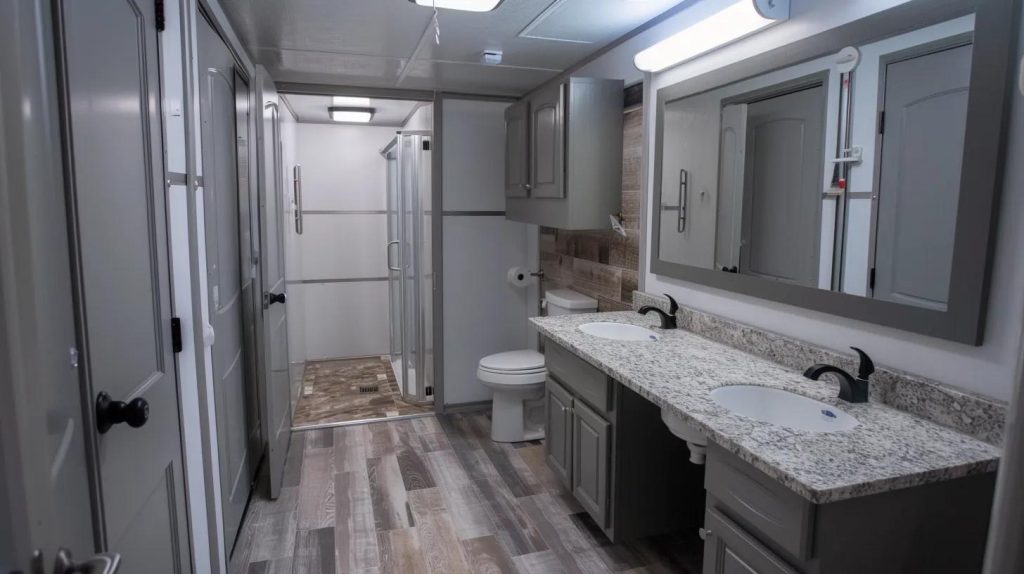
Basic trailers include flushing toilets, sinks, and lighting; upgraded units add climate control, hot running water, wood flooring, vanity mirrors, and ADA access. Expect a price premium of 30–100% or more for luxury features, attendants, or branded interiors that enhance guest experience and hygiene standards.
Case study: A corporate gala was upgraded from standard units to a three-module VIP trailer, increasing restroom spend by four times but reducing restroom wait times from 18 minutes to under three minutes, and boosting attendee satisfaction scores. You should compare itemized quotes for amenities such as freshwater tanks, HVAC, and attendant hours to avoid unexpected fees.
Seasonal Influences on Pricing
Demand Fluctuations Throughout the Year
Peak summer weekends (Memorial Day to Labor Day) often see rates increase by 30–50%; music festival season (May to September) and major holiday weekends create the most significant spikes. Off-season rentals in late fall and winter can be discounted 10–30%. If you ask What Factors Determine the Rental Price of Restroom Trailers for Events? Demand seasonality ranks near the top—book early for popular dates to avoid surcharges.
Weather Considerations
Cold snaps require winterization—insulated tanks, heated water lines, and skirting—which can add $75–$250 per unit or increase the rate by 10–30%. Freezing temperatures carry the risk of pipe bursts and unusable plumbing, which may necessitate emergency repairs and incur steep service fees. You’ll pay more for guaranteed operation in subfreezing conditions.
Hot-weather requirements—working HVAC, extra ventilation, and shade—typically add $50–$150/day for climate control; heavy rain or high winds may trigger site-preparation and anchoring fees ranging from $40 to $200. Choosing insulated tanks, heated water lines, or reliable generators upfront reduces the likelihood of costly last-minute replacements and ensures uninterrupted service during extreme conditions.
Event Type and Timing
Weddings and corporate galas demand luxury finishes, climate control, and attendants, which can raise prices by 20–60%. Construction sites or sporting events typically accept basic configurations and bulk trailer rentals at lower per-unit rates. Weekends and evening events usually carry higher minimums and surcharges, so your event timing directly affects the final quote.
Luxury trailers for a 200-guest wedding frequently range from $1,000 to $4,000 for a weekend package, depending on amenities and service level. Contractors renting multiple units for long-term jobs often see daily costs fall to $150–$400, with weekly discounts available. You should secure high-demand event bookings 3–6 months ahead to lock in availability and avoid premium rush fees.
Additional Costs to Consider
Delivery and Setup Fees
Expect base delivery fees to be typically between $75 and $300 within a local radius, then $2 to $5 per mile beyond that. Labor for setup often runs between $50 and $150 per hour. Special requirements, such as crane placement, elevator moves, long carries exceeding 50 feet, or maneuvering on steep terrain, can add $200–$1,000. Additionally, venue permits or after-hours deliveries may incur extra charges.
Maintenance and Cleaning Services
Standard servicing includes pump-outs, restocking supplies, and surface cleaning; a single pump-out averages $75–$250, while attendants typically cost $20–$35 per hour. Frequency—hourly attendants vs. one end-of-day clean—directly affects your total rental bill.
For a 300–500 person event, you might need attendants for 6–10 hours plus two pump-outs, which can raise the service line item by $400–$1,200. You should factor in extra sanitization for high-touch events, chemical disposal fees, and emergency call-outs; coordinated schedules reduce surprises—bundling attendant hours and scheduled pump-outs often lowers per-service costs. To answer “What Factors Determine the Rental Price of Restroom Trailers for Events?”, include these recurring service costs when comparing quotes.
Insurance and Liability Coverage
Vendors commonly require a $1,000,000 general liability policy or a certificate of insurance (COI). Obtaining a one-day COI can cost $50–$150, while including the trailer on an existing policy may result in premium increases. Absence of proper coverage can lead to event denial or significant financial exposure.
Different venues and municipalities may require higher limits or specific endorsements—alcohol service often necessitates limits of $2,000,000 or requires liquor liability coverage. You can be listed as the certificate holder or add the rental company as an additional insured. Some suppliers instead offer insured rentals and offset the cost via a higher rental rate or a refundable security deposit. Check venue rider language early to avoid last-minute insurance surcharges or contract refusals.
Discounts and Packages
Group Discounts for Multiple Trailers
Vendors commonly offer 5–20% off when you rent multiple restroom trailers; typical thresholds are three or more units for 10% and five or more units for 15–20%. If each trailer rents for $1,200/day, a 10% group discount on three units saves you $360/day. Ask about waived setup or delivery fees for bulk bookings and explicitly ask vendors, “What Factors Determine the Rental Price of Restroom Trailers for Events?” to compare true net savings.
Packages for Extended Rentals
Weekly and monthly packages can reduce your per-day cost by 25–40%; many providers lower the daily rate after seven consecutive days. For example, a $900/day trailer might drop to $540/day on a week-long contract, plus discounted delivery and setup. Confirm the required minimum rental period, as some companies require a 7-day minimum to access these rates.
Often, packages include scheduled maintenance, routine cleaning, and prioritized technical support, reducing downtime during multi-day events. Verify whether consumables (such as soap and paper) and mid-rental changeouts are included. One state fair saved 30% by negotiating free mid-rental servicing and consumable restocks. Check cancellation windows and deposit refund terms to avoid unexpected fees.
Special Offers for Non-Profit Organizations
Many companies offer 10–50% discounts or waived delivery fees for registered nonprofits when you provide documentation, such as a 501(c)(3) certificate. Eligibility varies by date and event type—fundraisers and disaster-relief efforts often qualify. A community food bank reduced a $4,000 rental to $2,600 after a 35% non-profit discount, plus waived setup charges.
Apply early and submit official proof at booking to lock discounted rates; some vendors require documentation before invoicing. Confirm whether the non-profit discount can be stacked with group or extended-rental packages—most suppliers disallow stacking. Still, they may offer alternative perks, such as free upgrades or extra servicing. Request the discount policy in writing to prevent billing surprises.
How to Choose the Right Rental Company
Reputation and Reviews
Look for companies with a 4.5-star rating or higher on multiple platforms, at least 50 verified reviews, and a minimum of three years in business. You can often gauge reliability from patterns—repeated notes about late delivery or poor sanitation are red flags. Ask references for the same event size, and pose the question, “What Factors Determine the Rental Price of Restroom Trailers for Events?” to see if answers include itemized costs and permits.
Service Quality and Support
Verify that the provider offers 24/7 support, has an average emergency response time under 2 hours, and provides routine cleaning every 24–72 hours. You also want to ensure a clear staffing ratio (e.g., one technician per 10 units) and proof of trained service crews for events with over 1,000 attendees.
Examine service-level agreements to require a clause guaranteeing on-site replacement within a set window (commonly 4–6 hours) and to document maintenance logs for each trailer. Request sample crew schedules, backup-unit availability, and past incident reports—one outdoor concert case study showed a vendor avoided major complaints by swapping a failed HVAC unit within 3 hours, preventing 300+ attendee issues. Confirm cleaning supplies, waste-disposal manifests, and technician certifications are included in the contract.
Transparency in Pricing
Compare itemized quotes that separate base rental, delivery/setup, cleaning, mileage, permit fees, and taxes. A typical delivery fee ranges from $150 to $400, and daily cleaning fees range from $50 to $200. Request an itemized quote so you can identify add-ons, such as generators or ADA upgrades, before signing.
Inspect cancellation terms and deposits—standard deposits typically range from 25–50%, and same-day or short-notice delivery surcharges commonly add 20–50% to the bill. Request a sample final invoice that matches line items and require a written statement confirming “no hidden fees” or a detailed list of all potential surcharges. This prevents surprises and makes cost comparisons between vendors meaningful.
Final Words
Considering all points, you should weigh capacity, amenities, delivery distance, event duration, setup requirements, and seasonal demand to determine the factors that influence the Rental Price of Restroom Trailers for events. By assessing your guest count, desired comfort level, accessibility needs, and budget, you can select the right unit and negotiate transparent pricing, ensuring your event runs smoothly and meets expectations.
FAQ
Q: What Factors Determine the Rental Price of Restroom Trailers for Events?
A: Rental price is determined by multiple interrelated factors: trailer class (basic porta-style vs. luxury units with flushing toilets, sinks, climate control), number of fixtures/occupancy capacity, length of rental (daily vs. multi-day), delivery/pickup distance and access difficulty, required hookups (water, sewer, power) or need for self-contained holding tanks, frequency of professional cleaning and waste pumping, ADA or specialty compliance, time of year (peak-season rates), and local permit or disposal fees. Suppliers combine these elements to produce a per-trailer or per-day quote; higher amenity levels, longer durations, and complex logistics drive higher prices.
Q: How does trailer size and amenity level change the cost?
A: Larger trailers with more stalls and urinals increase base cost because they require more materials, labor to deliver and set up, and often higher service frequencies. Luxury amenities—such as vanities, mirrors, climate control, hot running water, interior finishes, and music—add significant upcharges for both the unit rental and handling. ADA-compliant or specialized trailers (baby-changing stations, shower stalls) are priced higher due to design requirements and limited inventory. Cost typically scales with fixture count and finish quality.
Q: In what ways do delivery, setup, and site conditions impact the quote?
A: Delivery distance and travel time create fuel and labor charges; remote or congested locations can add mileage and time surcharges. Challenging site conditions—such as steep grades, soft ground, narrow access, the need for blocking, or crane service—require specialized equipment and extra labor, which increases fees. Tight schedules (late-night deliveries, quick turnarounds between events) may incur rush charges. If site preparation is needed (grading, mats, temporary ramps), those costs are usually billed separately.
Q: How do rental duration, guest count, and event type affect pricing?
A: Longer rentals generally lower the per-day rate but raise total cost; multi-day events require more frequent servicing. Guest count drives the number of fixtures needed—higher attendance requires more stalls or multiple trailers, which increases the quote. Event type matters: weddings and VIP events often demand upscale units and more frequent cleaning; festivals and construction sites require larger fleets, extended pump-outs, and backup units, all of which increase the price. Planners should provide accurate attendance and scheduling details to ensure correct pricing.
Q: What extra fees and regulatory costs should planners anticipate?
A: Expect line items for permits, inspection fees, sales tax, disposal/hauler charges, and environmental compliance in some jurisdictions. Additional services, including on-site attendants, scheduled pump-outs, daily cleaning, restocking supplies, heating or cooling systems, and emergency service calls, are billed separately. Insurance, damage waivers, deposits, and cancellation or rescheduling fees also impact the final invoice. Ask vendors for a detailed breakdown to avoid surprises.

Jack Montondo founded Montondo Trailer in 2014. Jack has worked hard to make his business a success, paving the way to making it a multi-million dollar. Montondo Trailers is a premier design and manufacturing leader in Custom Trailers. Here at Montondo Trailer, we have become an industry-leading manufacturer of Custom Trailers. Through the efforts of our expert team of engineers, designers, and sales personnel, we are here to ensure that our clients come out with a trailer that they could only dream of. We are constantly innovating and developing new ways to ensure our trailers are the best on the market. We firmly believe our dedication to quality sets us apart from our competition.