Portable Bathroom Rental Pricing: A Clear Guide to Size, Season, and Service
January 30, 2026
How to Choose the Right Bathroom Trailer for Sale
February 24, 2026
If you’re planning a multi-day event, managing a jobsite, or supporting a remote crew, portable shower trailers can make the difference between “getting by” and keeping everyone genuinely comfortable, clean, and productive. This guide walks you through how these trailers work, what to look for, and how to size and budget with confidence—so your team or guests step into a clean, private shower that feels like a real bathroom, not a workaround.
What Is a Portable Shower Trailer?
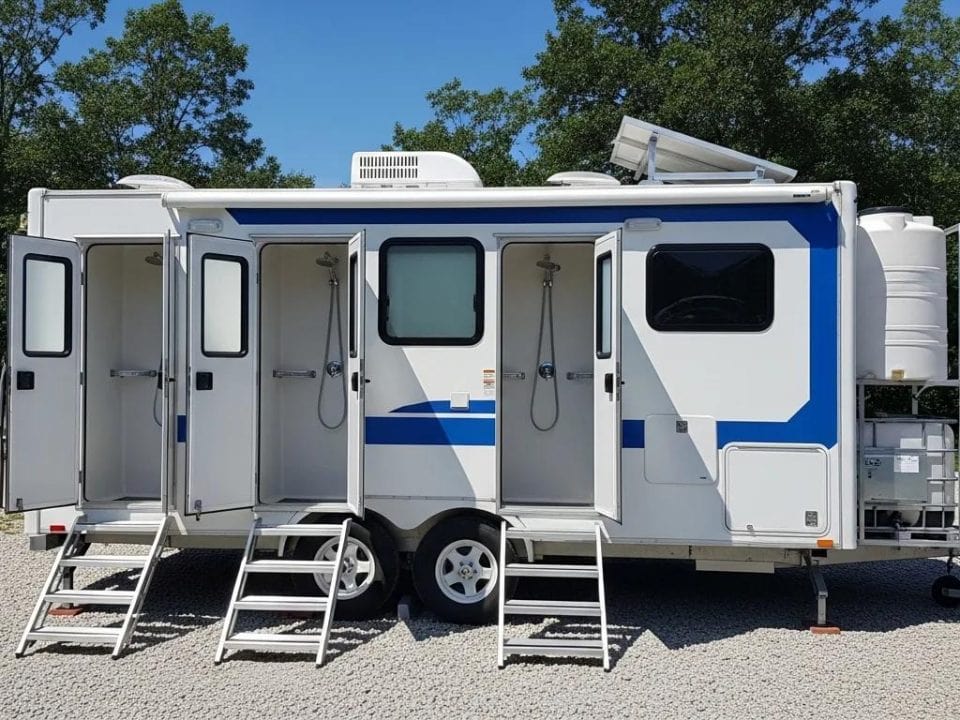
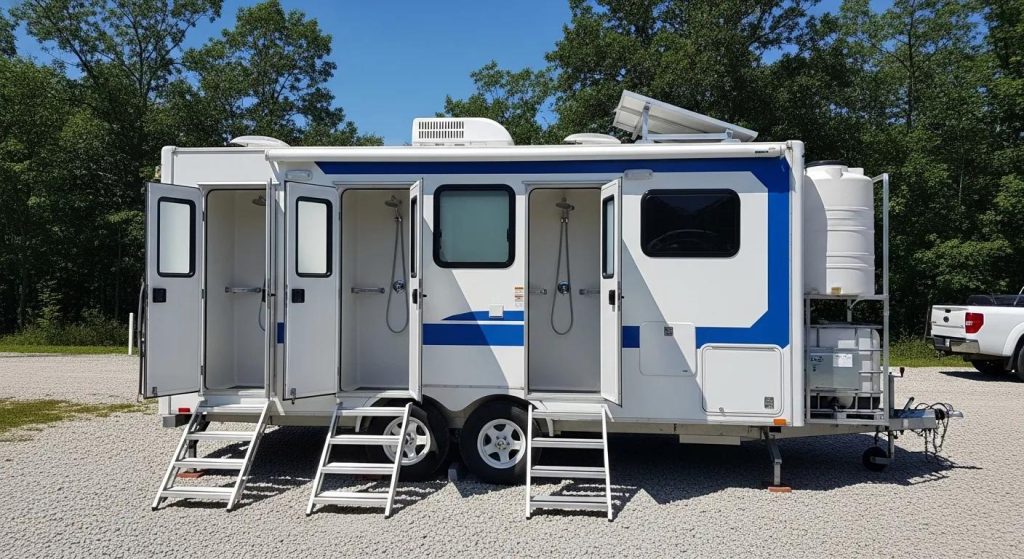
A portable shower trailer is a mobile unit that brings full-featured showers—private stalls, hot water, ventilation, and changing space—directly to your site. Think of it as a compact, code-aware bath facility on wheels. Units range from single-stall models to high-capacity trailers with separate entries and up to a dozen stalls, often paired with sinks, mirrors, and temperature-controlled interiors.
Unlike basic camp showers, these units are built for frequent use, easy sanitizing, and smooth throughput, whether you’re serving festival crowds, response teams, or long-term construction crews.
Who Uses Shower Trailers (and Why)
-
Events & festivals: Improve guest experience, lengthen dwell time, and reduce complaints.
-
Construction & industrial sites: Boost morale and hygiene for crews working long shifts.
-
Film & production: Keep talent and crew set-ready even in remote locations.
-
Municipal & relief operations: Provide dignified, private sanitation during outages or surge needs.
-
Camps & retreats: Seasonal capacity that flexes without permanent infrastructure.
The consistent thread: clean, hot showers keep people comfortable, reduce turnover, and help you uphold health standards.
How Portable Shower Trailers Work (Plumbing, Power, Heat)
Every trailer handles three essentials: fresh water, wastewater, and power.
-
Fresh water: Connect to a city spigot, well, or on-board fresh tank.
-
Wastewater (grey water): Route to an onsite sewer connection or an on-board holding tank serviced by a pump truck.
-
Power: Typically 30–50A electrical service; some configurations support generator power for off-grid sites.
-
Hot water: On-demand tankless or high-recovery tank heaters keep temperatures steady during peak use.
-
Climate: Insulation, ventilation, heat, and AC keep interiors comfortable year-round.
Must-Have Features Checklist
When you compare models, use this quick checklist to separate nice-to-have from need-to-have:
-
Capacity & throughput: Number of stalls, expected users per hour, and peak times.
-
Privacy & comfort: Full-height doors, changing space, interior lighting, quiet ventilation.
-
Materials: Easy-clean wall panels, sealed, non-slip floors, rust-resistant hardware.
-
Water systems: Tankless heaters, mixing valves, adjustable shower wands.
-
Waste management: Adequate grey tank size, service ports, and leak-resistant plumbing.
-
Accessibility: ADA-friendly options, ramps, and spacious layouts where required.
-
Four-season readiness: Insulation, heat tracing, winterization kits, and freeze protection.
-
Service access: Panels and valves positioned for quick maintenance.
-
Safety: GFCI protection, anti-scald controls, CO/propane detectors where applicable.
Sizing the Trailer to Your Headcount
Match capacity to real-world use instead of “best case”:
-
Short-window events: If showers are limited to certain hours (e.g., early morning), you’ll need more stalls to avoid lines.
-
All-day worksites: Throughput spreads out; you may use fewer stalls with consistent availability.
-
Rule of thumb: Estimate 5–8 minutes per user per stall during peak periods, then add margin for cleanup and slowdowns.
-
Layout decisions: Co-ed with private stalls vs. dedicated entries; family/assisted rooms for inclusive access.
Water & Power Planning
-
Fresh water consumption: For hot showers, plan 10–15 gallons per user, depending on flow rate and length. Low-flow heads can reduce to 6–10 gallons.
-
Grey water strategy: If you lack a sewer tie-in, right-size the holding tank and service frequency to your peak day.
-
Power draw: Water heaters and climate control drive the load; confirm amperage, voltage, and generator strategy if utility power isn’t available.
-
Hoses & distances: Keep connections short where possible to reduce pressure loss and heat loss.
Hygiene, Safety, and Guest Experience
Clean, safe showers keep people coming back (and crews on the clock):
-
Non-slip floors and well-placed grab bars reduce slips.
-
Ventilation fights humidity and odors, protecting finishes and indoor air quality.
-
Touch points: Choose lever handles and easy-sanitize surfaces.
-
Cleaning plan: Quick mid-day wipes plus deeper end-of-day sanitizing keep stalls fresh.
-
Consumables: Stock extra soap, paper goods, and trash capacity for peak periods.
Accessibility & Codes
If your audience includes guests with mobility needs—or if your project scope requires it—spec an ADA-friendly model with ramp access, wider doors, appropriate clearances, and compliant fixtures. Confirm local code triggers for temporary sanitation, power, and wastewater handling.
Setup, Site Prep, and Winterization
-
Location: Level, well-drained ground with safe footpaths and lighting.
-
Access: Truck access for delivery and periodic service.
-
Connections: Verify water pressure, backflow prevention, electrical panel size, and hose runs.
-
Cold weather: Use insulated lines and heat tracing, keep interior heat active, and stage de-icing materials and door sweeps.
-
Hot weather: Shade where possible; keep AC set points reasonable to control moisture.
Rental vs. Purchase: Which Model Fits?
Renting is ideal for short-term events, pilot programs, or seasonal peaks. You benefit from lower upfront costs, quick deployment, and the ability to right-size from project to project.
Buying can be smarter for long-term, high-utilization needs. Ownership allows custom layouts, branding, and predictable availability. Factor in storage, insurance, and a realistic maintenance plan.
Tip: If your calendar is full nine months a year, run a side-by-side comparison of annual rental spend vs. loan + ownership costs. Many teams find ownership pencils out quickly—especially when resale values stay strong.
What Drives Cost?
-
Size & stall count: More stalls and premium finishes increase price.
-
Season & demand: Peak festival or construction seasons can affect rental pricing and availability.
-
Transport distance: Delivery/pickup miles plus any special routing or permits.
-
Service frequency: Pump-outs, water refills, and restocking cycles.
-
Power & climate: Generator packages, winterization, and four-season readiness.
Maintenance: A Simple, Repeatable Routine
-
Daily: Trash removal, surface wipe-downs, restock soap and paper, quick floor mop.
-
Every pump-out: Inspect seals, drains, and water heater diagnostics; sanitize stalls thoroughly.
-
Weekly: Check ventilation, tighten loose hardware, test GFCI, and clean intake filters.
-
Monthly/Seasonal: Inspect seals and caulking, re-level if needed, review winterization or de-winterization steps.
Sustainability Options That Also Save Money
-
Low-flow showerheads and aerated faucets reduce water and fuel load.
-
On-demand heaters cut standby losses.
-
LED lighting trims electrical draw.
-
Grey water strategies and responsible pump-out scheduling reduce trips.

Elegant white mobile trailer parked in a desert landscape with mountains in the background, ideal for RV camping or tiny home living.
Common Mistakes to Avoid
-
Under-sizing for peak hours; lines form and guests get frustrated.
-
Forgetting power details: wrong amperage or cord length turns setup into a scramble.
-
Neglecting service plans; full grey tanks can shut you down mid-event.
-
Skipping accessibility when your audience requires it.
-
Ignoring seasonality—winter needs heat tracing; summer needs robust AC.
How Montondo Trailer Helps
Montondo Trailer builds durable units tailored to real-world workloads—from compact footprints to high-capacity, four-season builds. If you’re evaluating portable shower trailers for an upcoming project, explore Montondo’s range of shower trailers to see layouts, finishes, and upgrade paths that fit your use case. You’ll find options with ADA-friendly access, tankless hot water, and easy-clean interiors designed for fast turnaround between users.
Key Benefits (Table)
| Benefit | Why it matters | What to look for |
|---|---|---|
| Comfort & privacy | Keeps guests and crews happy and productive | Full-height doors, changing space, quiet fans |
| Reliable hot water | Consistent showers during peak use | Tankless or high-recovery heaters, mixing valves |
| Cleanliness & safety | Reduces slips and keeps interiors fresh | Non-slip floors, easy-sanitize panels, proper drainage |
| Fast setup | Minimizes site disruption | Clear utility hookups, labeled valves, service panels |
| Year-round use | Extends season and cuts downtime | Insulation, heat tracing, AC, freeze protection |
| Scalable capacity | Matches demand without overspending | Stall count, dual entrances, throughput planning |
| Budget control | Predictable costs that match utilization | Rental vs. ownership modeling, right-sized tanks |
| Accessibility | Inclusive experience and code alignment | ADA-friendly layouts, ramps, wider clearances |
Sample Spec Paths (Good / Better / Best)
-
Good: 2–3 stalls, on-demand water heater, on-board tanks, basic AC/heat—ideal for small crews or weekend events.
-
Better: 4–6 stalls, separate entry sides, larger grey tank, enhanced ventilation—solid choice for mid-size events or ongoing sites.
-
Best: 8–10+ stalls, ADA-friendly room, four-season package, premium finishes, generator-ready—built for festivals, relief bases, and high-traffic jobsites.
Deployment Timeline (What to Do, When)
-
Two–four weeks out: Lock dates, headcount, and site utilities.
-
One–two weeks out: Confirm delivery path, pad/leveling needs, and power.
-
48 hours out: Stage hoses, verify amperage, and mark tank service area.
-
Day of delivery: Final leveling, plumbing hookups, power on, temp set.
-
During use: Log cleanings, stock levels, and service visits.
-
Wrap-up: Pump out, sanitize, and conduct a final inspection before pickup or storage.
When in Doubt, Start Here
If you’re still weighing options, begin with your peak hour demand, accessibility requirements, and the realities of water/power on your site. From there, choose the smallest trailer that confidently meets peak loads—and add margin for comfort. Montondo can help you tune stall count, tank sizes, and seasonal packages, then scale up or down as your calendar changes. See current shower trailers to get a feel for layout and finish levels that fit your audience.
FAQs
1) How many stalls do I need for 150 users per day?
If most users shower within a two-hour window, plan roughly 5–8 minutes per shower. You’ll typically want 5–7 stalls to avoid lines, plus buffer for cleaning. Spread usage across more hours and you can cut that number.
2) Can a shower trailer run without city water or sewer?
Yes. Use on-board fresh and grey tanks, then schedule pump-outs and refills. Confirm generator power if utility service isn’t available.
3) Are trailers comfortable in winter or extreme heat?
With insulation, heat tracing, interior heat, and AC, four-season models stay comfortable. In winter, keep interior heat active and shield external lines.
4) What’s the difference between a shower trailer and a restroom trailer?
Restroom trailers focus on toilets and sinks; shower trailers add full showers with hot water and changing areas. Combination units provide both in one chassis.
5) Should I rent or buy?
Short-term or variable use often favors rental. Consistent, long-term use can justify ownership, especially if you want custom layouts and on-call availability.
Jack Montondo founded Montondo Trailer in 2014. Jack has worked hard to make his business a success, paving the way to making it a multi-million dollar. Montondo Trailers is a premier design and manufacturing leader in Custom Trailers. Here at Montondo Trailer, we have become an industry-leading manufacturer of Custom Trailers. Through the efforts of our expert team of engineers, designers, and sales personnel, we are here to ensure that our clients come out with a trailer that they could only dream of. We are constantly innovating and developing new ways to ensure our trailers are the best on the market. We firmly believe our dedication to quality sets us apart from our competition.